


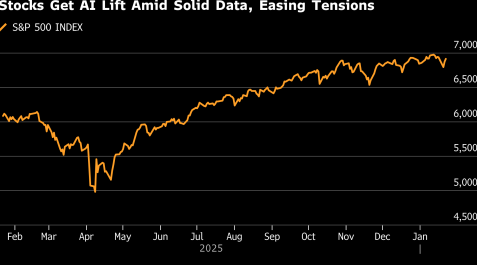
Cooling geopolitical tensions, gains in large technology stocks, and solid economic data are supporting equity markets, which remain positive even after inflation data came in broadly in line with expectations. At the same time, bonds are retreating.
Stocks are rising globally, with the S&P 500 posting a second consecutive day of gains after the U.S. softened its tone on the potential acquisition of Greenland. This has helped calm market sentiment and pushed investors back toward risk assets. Large technology stocks are on track for their strongest day since the start of 2026, after comments from Nvidia CEO Jensen Huang boosted optimism around artificial intelligence. Meanwhile, small-cap stocks are outperforming the broader market for a 14th consecutive session.
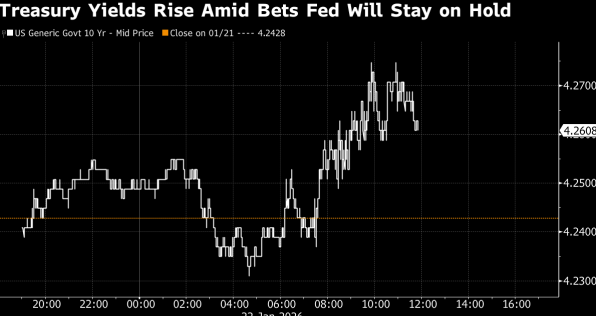
U.S. economic data are further reinforcing the positive picture. Shorter-dated government bonds, which are more sensitive to monetary policy, are underperforming after strong macroeconomic indicators strengthened expectations that the Federal Reserve will keep interest rates unchanged in January.
The U.S. economy grew slightly faster in the third quarter than initially estimated, supported by stronger exports and a smaller drag from inventories. New jobless claims stabilized around 200,000, while personal spending rose at a solid pace in November, highlighting the resilience of consumers.
According to analysts, U.S. households remain the main engine of economic growth. Strong consumption reduces near-term recession risks and supports corporate revenues, particularly in consumer-oriented sectors. At the same time, resilient demand suggests that interest rates are likely to remain higher for longer.
In this environment, investor returns are more likely to come from companies with strong pricing power, resilient margins, and good earnings visibility, rather than from broad market gains driven by lower interest rates.
Meanwhile, the agreement that persuaded President Donald Trump to ease tensions over Greenland has opened the door to enhanced NATO security in the Arctic and reduced potential risks from Russia and China. Market participants note that this episode once again demonstrates how sensitive markets are to headlines and how quickly sentiment can shift when geopolitical risks subside.
During the session, the S&P 500 rises by around 0.7%, the yield on the 10-year U.S. Treasury increases to 4.26%, and the U.S. dollar weakens. Oil prices decline after Ukrainian President Volodymyr Zelensky said that the U.S., Russia, and Ukraine will hold meetings in the coming days.
The latest economic data are likely to give the Federal Reserve confidence that the economy remains stable, despite some cooling in the labor market. This reduces the need for an urgent rate cut at the upcoming meeting and supports expectations that the central bank will maintain a wait-and-see stance for longer.
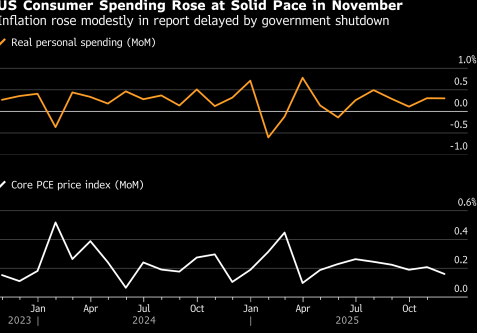
U.S. real GDP increased at a revised annual rate of 4.4%, the fastest pace in the past two years. The Fed’s preferred measure of core inflation rose by 0.2% month over month in November and by 2.8% year over year, indicating that inflationary pressures remain above target levels.
Markets expect the Federal Reserve to keep rates unchanged over the coming months, with the first rate cut potentially arriving later in 2026, provided growth remains stable and inflation continues to cool gradually.
Recent economic data support a more cautious short-term approach to monetary policy. According to analysts Oscar Munoz and Gennadiy Goldberg of TD Securities, the accumulated information sets a higher bar for additional policy easing.
They expect the central bank to keep its key interest rate in the 3.50%–3.75% range. Fed Chair Jerome Powell is likely to avoid making specific commitments about near-term rate cuts, while reiterating that the committee’s median forecast still includes policy easing later in the year.
More broadly, the fundamentals of the U.S. economy remain solid. Some market participants expect the Federal Reserve to deliver two or three rate cuts during the year, creating a supportive backdrop for markets even amid periodic bouts of volatility tied to geopolitical risks.
President Trump’s approach to the Greenland issue at the World Economic Forum in Davos has been viewed as effective by parts of the financial community. According to the CEO of Stifel Financial, Trump’s strategy involved initially provoking a strong reaction and then shifting quickly toward negotiations, leading to a rapid easing of tensions.
At the same time, markets and Davos participants are discussing potential European responses. There is speculation that European countries could use U.S. assets as leverage in response to Washington’s stance on Greenland. Greenland’s pension fund is reportedly considering whether to continue investing in U.S. equities, though such a move would likely be largely symbolic.
President Trump has warned of a “serious retaliation” if European countries begin selling U.S. assets in response to tariff threats linked to Greenland, stating that the U.S. has sufficient tools to respond forcefully in such a scenario.
For now, however, there are no clear signs that foreign investors are pulling back from U.S. stocks and bonds. Strategists at major international banks note that while recent headlines have raised questions about a potential “investor boycott,” actual market flows do not support that narrative.
Analysts believe the Greenland issue will remain in focus in the near term, with markets continuing to react sensitively to political and geopolitical news. At the same time, the recent rebound in equities underscores that solid economic fundamentals remain the dominant driver.
Nasdaq representatives emphasize that companies from around the world remain highly engaged with U.S. markets due to the potential for strong returns. Over the past year, net capital inflows from foreign investors into the U.S. equity market have increased by around $3 trillion, reinforcing the U.S. position as a key destination for global capital.
BlackRock CEO Larry Fink said he does not see a bubble in the artificial intelligence sector, highlighting the scale of investment required to develop the technology.
In an interview with Bloomberg Television at the World Economic Forum, Fink said there is little doubt about the long-term potential of artificial intelligence. According to him, the massive capital expenditures needed for infrastructure, software, and applications make a bubble scenario unlikely at this stage.
At the same time, markets are showing a clear shift in leadership. Small-cap stocks are once again outperforming large-cap companies, which analysts view as a signal of a new market trend. According to Jonathan Krinsky of BTIG, while corrections are to be expected, investors should stay aligned with this trend, which he believes is still in its early stages.
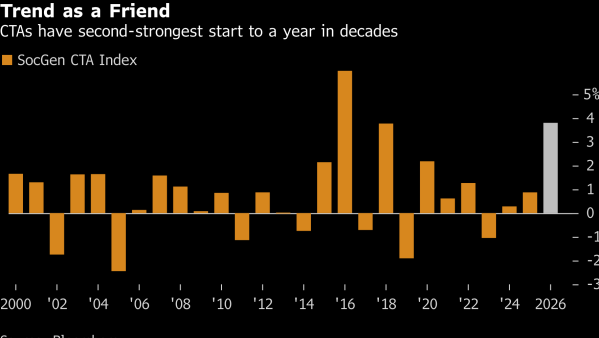
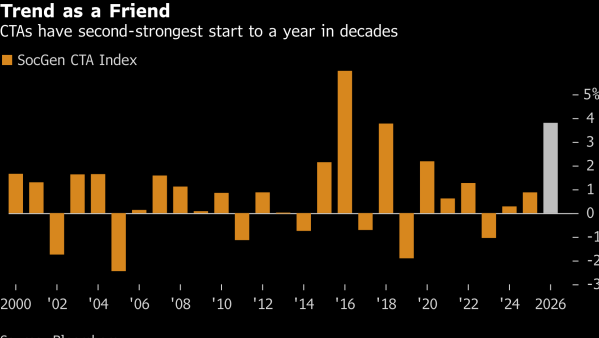
Meanwhile, trend-following funds are starting 2026 with fresh momentum. They are outperforming both equities and bonds after being frequently whipsawed by short-lived market moves last year.
A Société Générale index tracking leading trend-following strategies is up nearly 4% in the first weeks of the year, marking the second-strongest start since the data began in 2000. Rising metals prices, a weaker Japanese yen, and the steady performance of global equity markets are creating a favorable environment for these strategies — exactly the type of sustained moves they are designed to exploit.
Against this backdrop, hedge funds are attracting their largest inflows since before the global financial crisis. Capital inflows have pushed assets under management in the sector above a record $5 trillion, signaling a growing appetite for alternative investment strategies amid a changing market landscape.
-Source: Bloomberg Terminal
Varchev Absolute Trader
борсова платформа
- Търгувай над 3000 финансови инструмента: Crypto, Форекс, Акции, Индекси, Суровини, ETF-и
- Използвай платформа с директно изпращане ордерите на борсите
- Cloud base платформа - твоят трейдинг сетъп на всяко устройство
- Market Sentiment - търгувай с настроенията на инвестиционите банки
- Top movers - най-горещите трейдове във всеки един момент
- Stocks scanner - филтрирай най-подходящите за твоя трейдинг стил пазарни инструменти
- Heat map - Търгувай в посоката на големите играчи
Meta Trader 5
- Търгувай Crypto, Форекс, Акции, Индекси, Суровини - всичко на едно място
- Автоматизирана търговия с интелигентни стратегии и роботи (Expert Advisors)
- Разширен технически анализ с хиляди индикатора и инструменти
- Сигурност и стабилност – платформа, доверена от милиони по света
- Нулев марджин при насрещни/хеджирани позиции
- Без комисиона при търговия със CFDs
- Светкавично изпълнение на сделките
Read more:

Login to comment
Comments:
Leave a comment